Hobbs Rules Out Using State Money to Ease Grand Canyon Entrance Delays After Federal Layoffs
Arizona's governor says she will not spend state dollars covering laid-off National Park Service workers, citing no guarantee of federal reimbursement.
By Juan Gonzalez ·
Gov. Katie Hobbs said Friday that Arizona will not use state resources to help staff the Grand Canyon, even as federal job cuts threaten to ripple through the state's economy.
The governor criticized what she called the "rash and irrational decisions" of the Trump administration in cutting federal spending. She said the state has taken action in areas where she believes it has legal standing to challenge those moves, but that stepping in to replace laid-off federal workers is not among them.
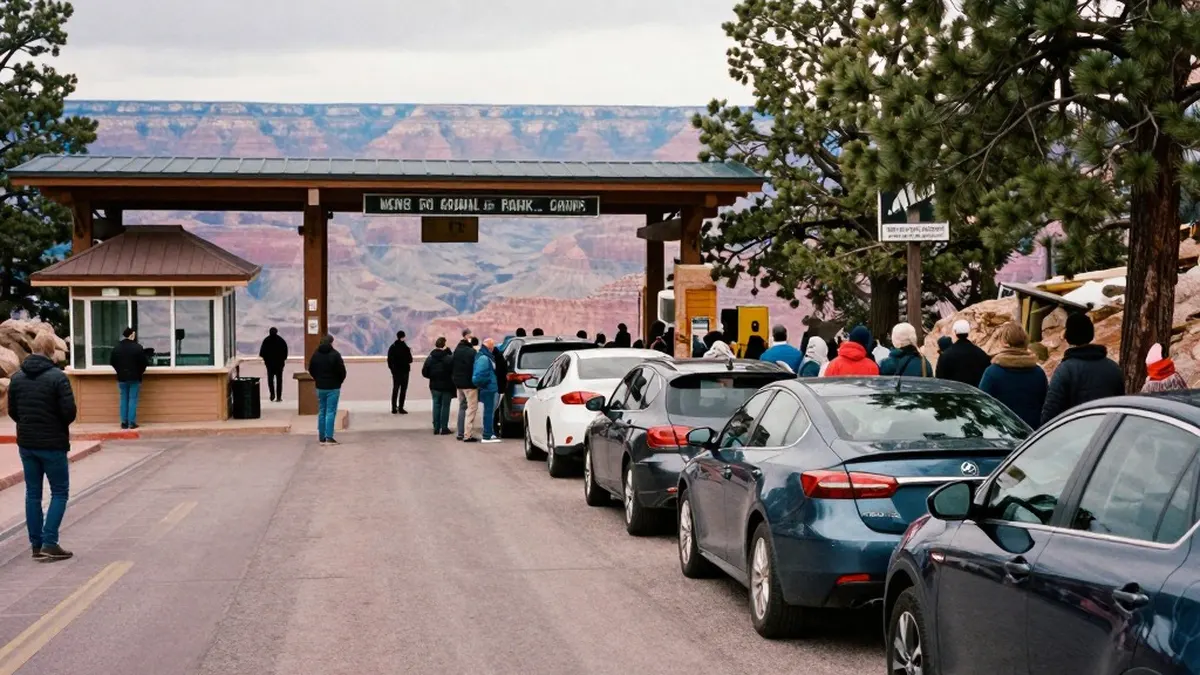
About 1,000 National Park Service employees have been laid off nationwide, including 10 at the Grand Canyon. The governor's office said four of those worked the park entrance, and their absence has contributed to longer wait times that have drawn wide attention. In a social media post last week, Hobbs called the situation "a slap in the face for Arizonans and all who love to come here." She noted that nearly 5 million people visited the park last year and argued that removing essential workers undermines the state's economy.
Asked Friday whether the state would help ease the lines, Hobbs pointed to the cost. "You're talking about using state dollars to pay federal workers," she said, adding that there is no guarantee Arizona would be reimbursed. She said she has no interest in "bailing out the Trump administration for dumb decisions they make."
Hobbs acknowledged the park's importance, saying it "brings jobs" and draws visitors who spend money in the state. She rejected the suggestion that politics played a part in her decision, including the idea that chaos at the parks reflects poorly on President Trump. "That's not a consideration," she said, explaining that her test is what is best for Arizonans. She added that she will work with the administration on issues such as border security but will speak out when it makes decisions she considers harmful to the state.
Arizona has stepped in before. During a nationwide park closure in 1995, when Congress failed to pass a budget, then-Gov. Fife Symington first sent National Guard troops and state park officials to reopen the canyon, in what was widely viewed as a media event, and they were turned away. He later struck a deal with the Park Service for the state to front $17,000 a day to keep part of the park, through Mather Point, open to visitors. That arrangement lasted 21 days and was meant to limit the economic damage from the closure.
Later governors followed suit. Jan Brewer spent $651,000 to keep the canyon open during the 2013 federal shutdown, and in 2018 then-Gov. Doug Ducey reached a similar agreement with the Park Service using money from the state's Parks and Tourism departments. In 1995, Symington secured a commitment that the state would be repaid once Congress adopted a budget, and the 2018 arrangement likewise involved reimbursement.
The current situation differs in a key respect. Those earlier closures were temporary, with the president and Congress negotiating a new budget, and no one doubted the parks would reopen afterward. This time, the administration has ordered broad funding cuts affecting the Park Service and many other agencies, with no indication of when, or whether, the money will be restored.
The park technically remains open, but reports of delays there and elsewhere have become a national story. That raises the concern that some would-be visitors may stay away from the Grand Canyon, and from Arizona, until the situation is resolved.
Source: KJZZ